What Is the Classification of Fruits?
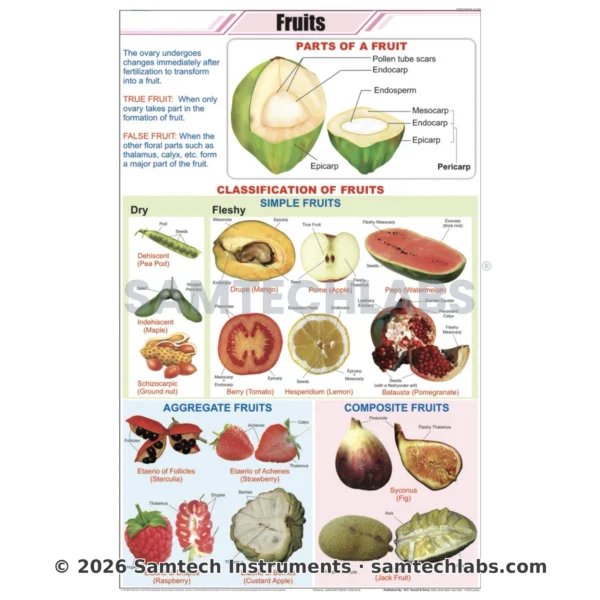
In botany, a fruit is the mature or ripened ovary of a flower, usually containing seeds. Fruits are classified according to how many ovaries and flowers they develop from, whether the pericarp (fruit wall) is fleshy or dry, and whether a dry fruit splits open at maturity.
This gives three primary categories of fruit:
- Simple fruits — develop from a single ovary of a single flower.
- Aggregate fruits — develop from many free ovaries of a single flower.
- Multiple or composite fruits — develop from the ovaries of many flowers in one inflorescence.
Fruit Types With Examples
The table below presents the standard botanical classification of fruits with examples. Terminology may vary slightly between textbooks, particularly for some less common fruit types.
| Category | Fruit Type | Key Feature | Examples |
|---|
| Simple — Fleshy | Berry | Fleshy pericarp with seeds embedded in the pulp | Tomato, Grape, Banana, Guava |
| Drupe | Stony endocarp enclosing the seed | Mango, Coconut, Peach |
| Pome | False fruit with fleshy thalamus and papery endocarp | Apple, Pear |
| Hesperidium | Leathery rind with juicy hairs inside chambers | Orange, Lemon |
| Pepo | Thick rind with parietal placentation | Cucumber, Watermelon, Pumpkin |
| Balausta | Many-seeded fruit with a leathery rind and juicy seed coats | Pomegranate |
| Simple — Dry, Dehiscent | Legume (Pod) | Splits along both sutures | Pea, Bean |
| Follicle | Splits along one suture | Calotropis |
| Capsule | Splits by pores, teeth or valves | Cotton, Lady's finger |
| Siliqua | Splits upward from the base | Mustard |
| Simple — Dry, Indehiscent | Achene | One seed, free from the pericarp | Clematis, Mirabilis |
| Caryopsis | Seed coat fused to the pericarp | Wheat, Maize, Rice |
| Cypsela | Develops from an inferior ovary and often bears a pappus | Sunflower, Marigold |
| Nut | Hard, woody pericarp | Cashew, Chestnut |
| Samara | Winged pericarp that aids wind dispersal | Maple, Hiptage |
| Simple — Schizocarpic | Cremocarp | Splits into two one-seeded mericarps | Coriander, Fennel |
| Regma | Splits into three or more cocci | Castor |
| Lomentum | Constricted pod that breaks into segments | Groundnut, Acacia |
| Aggregate (Etaerio) | Etaerio of Achenes | Achenes arranged on a fleshy thalamus | Strawberry, Lotus |
| Etaerio of Drupes | Cluster of small drupes | Raspberry |
| Etaerio of Berries | Cluster of berry-like fruitlets | Custard apple |
| Multiple / Composite | Sorosis | Develops from a spike or spadix inflorescence | Pineapple, Jackfruit, Mulberry |
| Syconus | Develops from a hypanthodium inflorescence | Fig |
True Fruits and False Fruits
A true fruit develops from the ovary alone. Mango, tomato and pea are common examples of true fruits.
A false fruit, also known as a pseudocarp or accessory fruit, develops when floral parts other than the ovary contribute to the fruit structure. Apple and pear are common examples in which the thalamus contributes substantially to the fleshy edible portion. In strawberry, the fleshy red portion is the enlarged receptacle, while the small structures commonly called seeds on its surface are the actual fruits, known as achenes.
How to Classify a Fruit Step by Step
- Consider the number of flowers and ovaries. A fruit developing from one ovary of one flower is simple; from several free ovaries of one flower is aggregate; and from the ovaries of several flowers is multiple or composite.
- Examine the pericarp. If it remains soft and fleshy at maturity, it is a fleshy fruit. If it becomes dry or papery, it belongs to one of the dry-fruit categories.
- For fleshy fruits, examine the fruit wall. A stony endocarp is characteristic of a drupe, while a soft pericarp with seeds embedded in the pulp is characteristic of a berry.
- For dry fruits, check whether the fruit opens naturally at maturity. Fruits that split open are dehiscent, those that remain closed are indehiscent, and those that break into one-seeded units are schizocarpic.
- Consider which floral parts form the fruit. A fruit developing from the ovary alone is generally classified as a true fruit, while participation of other floral structures may result in a false or accessory fruit.
About the Fruits and Their Classification Chart
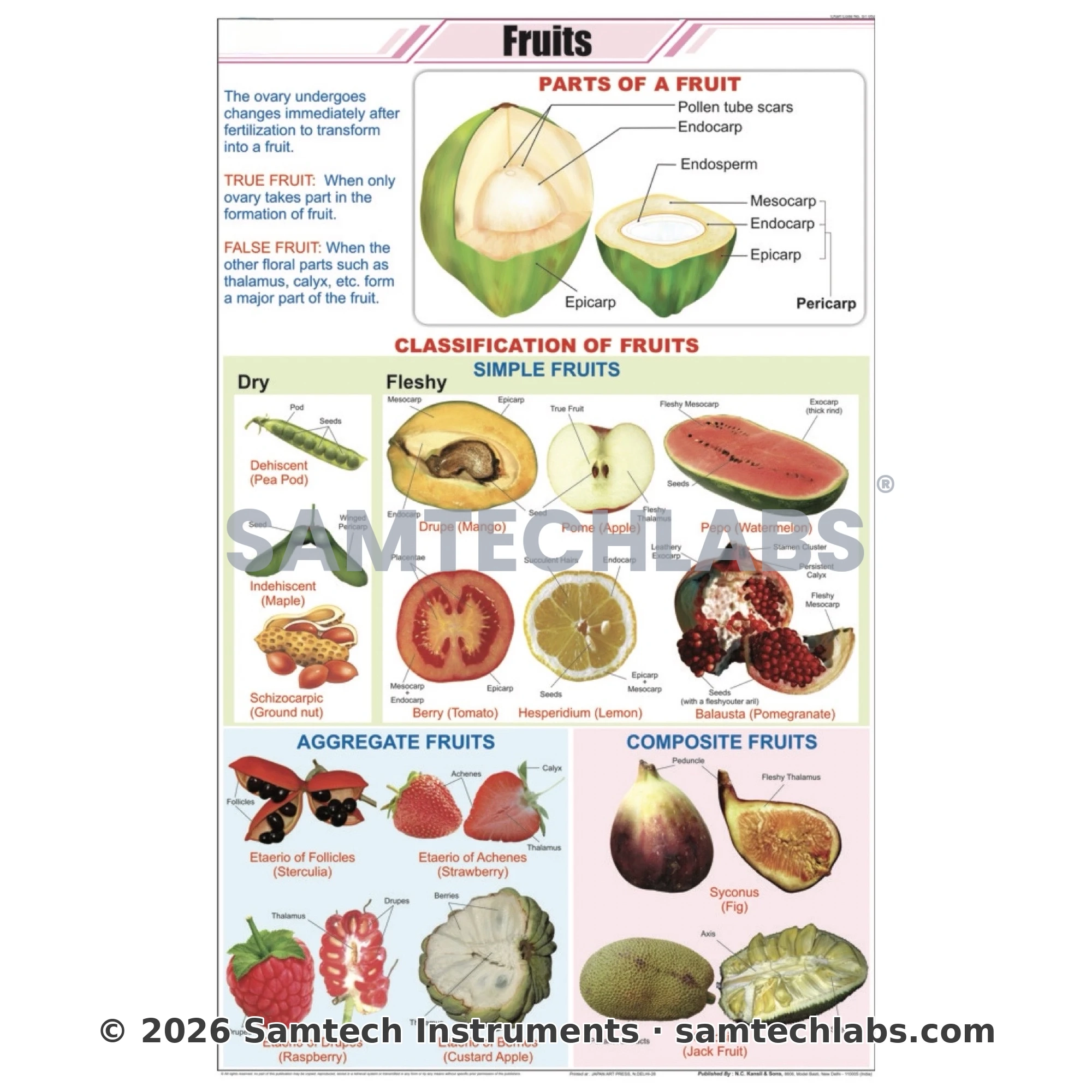
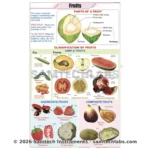
The Fruits and Their Classification Chart is an educational botany wall chart designed to help familiarise students with the subject of fruit classification in a realistic and familiar context. It can support visual learning in schools, biology classrooms, science laboratories and other educational environments.
Printed in full colour on art paper, the chart is laminated on both sides with thick plastic film and fitted with plastic rollers for convenient display. Its large format makes it suitable for use as a visual teaching aid during classroom lessons, biology demonstrations and laboratory learning activities.
| Specification | Detail |
|---|
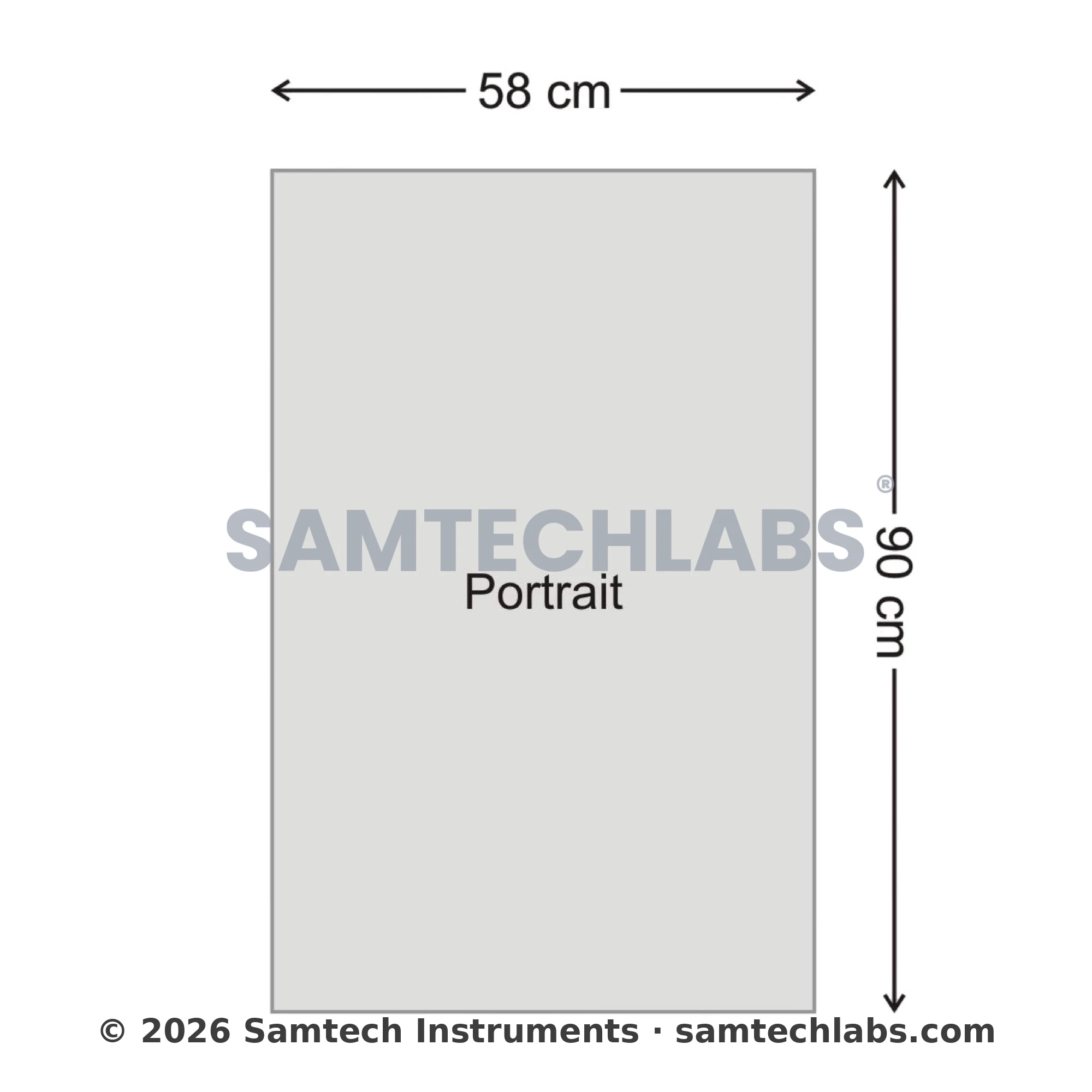
| Chart Size | 58 × 90 cm |
| Paper | Art paper with full-colour printing |
| Lamination | Thick plastic film on both sides |
| Mounting | Fitted with plastic rollers |
| Subject | Botany — fruits and their classification |
| Suitable For | Schools, biology classrooms, science laboratories and educational institutions |
The double-sided lamination and plastic roller mounting make the chart suitable for convenient display and regular educational use in classrooms and laboratories.
For Teachers and Lab Administrators
Setting up or upgrading a botany lab? SamTech Labs offers educational charts, models and specimens for schools, colleges and laboratory learning environments. Request an institutional quote.
Related Botany Charts and Learning Resources
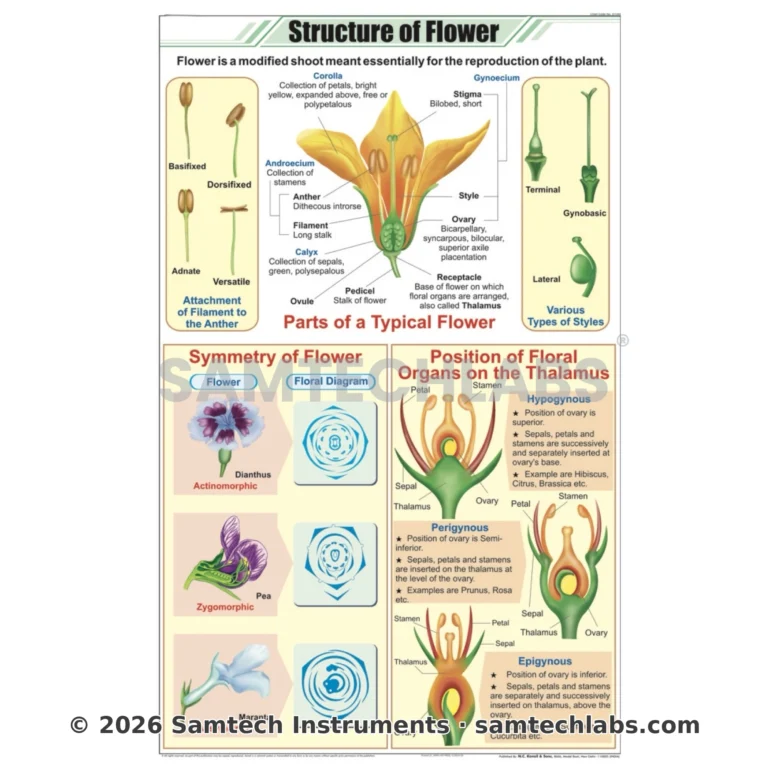
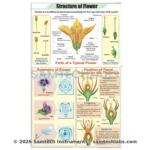
Understanding fruits becomes easier when students can connect fruit development with flowers, seeds and other botanical structures. Explore the Structure of Flower Chart to study flower structure, or continue the plant life-cycle learning sequence with the Germination of Seed Chart.
You can also browse the complete collection of botany charts or complement visual learning with a Typical Flower Model and common botany specimens.
Frequently Asked Questions
What are the three main categories of fruit?
The three primary categories are simple fruits, aggregate fruits and multiple or composite fruits. Simple fruits develop from one ovary of one flower, aggregate fruits develop from several free ovaries of one flower, and multiple fruits develop from the ovaries of several flowers in an inflorescence.
What are the types of fruits in botany?
Fruits are broadly classified as simple, aggregate and multiple fruits. Simple fruits may be fleshy or dry. Fleshy fruit types include berry, drupe, pome, hesperidium, pepo and balausta, while dry fruits may be dehiscent, indehiscent or schizocarpic.
What type of fruit is a pomegranate?
A pomegranate is generally classified as a balausta, a many-seeded fleshy fruit with a leathery outer rind.
Is a strawberry a berry?
No. Botanically, a strawberry is an aggregate fruit. The fleshy red portion is the enlarged receptacle, while the small achene-like structures visible on its surface are the individual fruits.
What size is the Fruits and Their Classification Chart?
The chart measures 58 × 90 cm. It is printed in full colour on art paper, laminated on both sides with thick plastic film and fitted with plastic rollers.











 Overview